


In Steamboat Springs, two homes can be only a few streets apart and have very different short term rental possibilities. The reason is the City's Short Term Rental Overlay Zone, often called the Green, Yellow and Red zones. Understanding the map is an important first step if you hope to rent a Steamboat property when you are not using it.
The Green Zone attracts considerable interest from second home buyers, but it is not the only place to find properties with rental potential. And a Green Zone address does not automatically mean that a particular condo or home can be rented nightly.
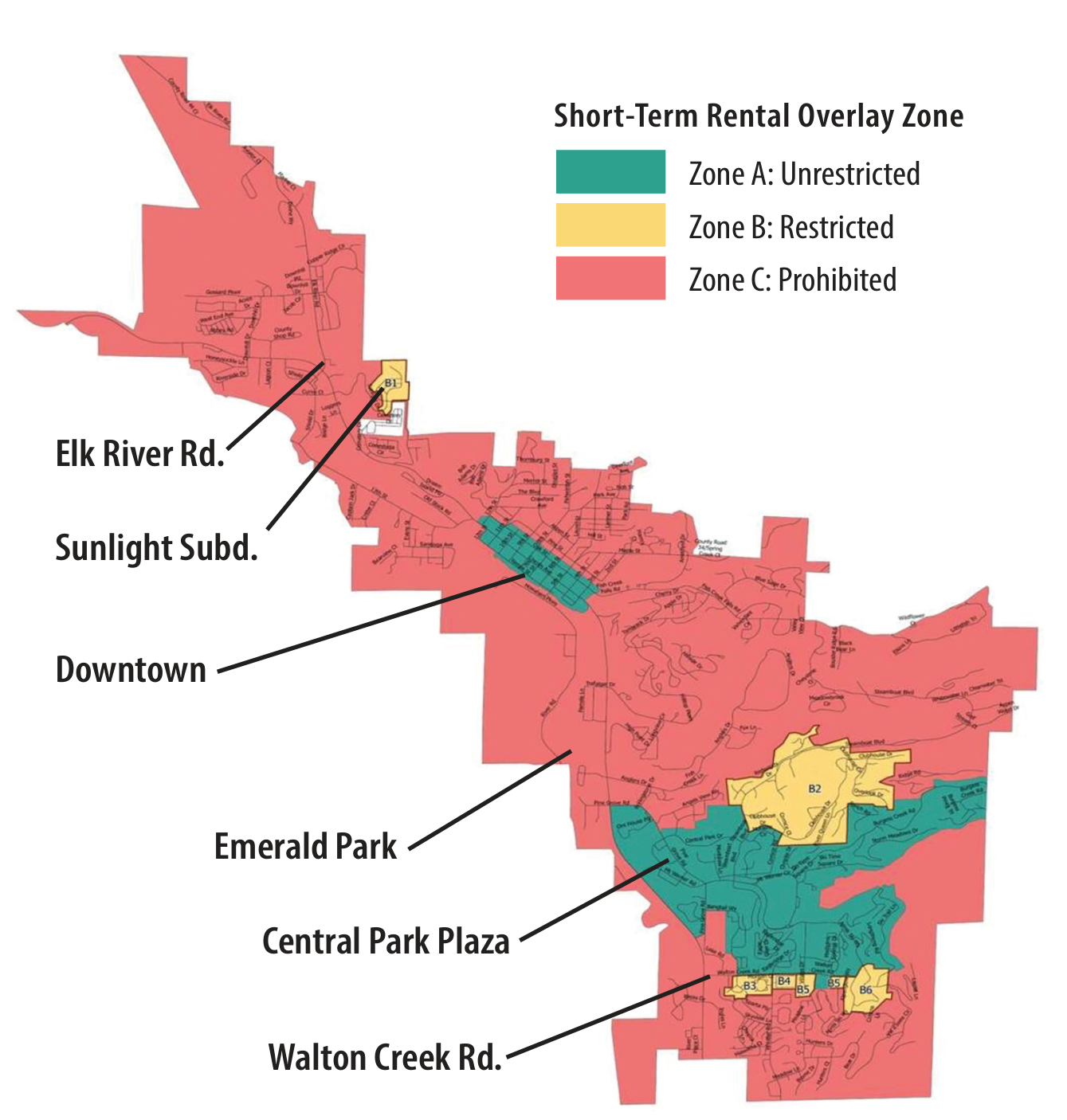
What are Steamboat's three short term rental zones?
The City divides properties into three areas for conventional short term rentals, generally stays of fewer than 30 consecutive days when the owner or permanent resident is not living at the property. Each zone works differently.
Green Zone (Zone A): Unrestricted
Conventional short term rentals are allowed as a permitted use in Zone A, and the City does not place a numerical cap on the number of licenses available in the zone. That makes it an appealing starting point for buyers who want the flexibility to offer nightly or weekly rentals. However, a City license and compliance with operating requirements are still necessary. A homeowners association or condominium declaration may prohibit or restrict rentals even when the property is within Zone A.
Yellow Zone (Zone B): Restricted
Zone B is divided into six subzones, each with a cap on conventional short term rental licenses. Some properties may qualify through an existing legal nonconforming use or other applicable licensing category. Availability of a new conventional license is not something buyers should assume. Before making an offer, verify the property's exact subzone, current rental history, registration and license status.
Red Zone (Zone C): New conventional STRs prohibited
Zone C generally prohibits new conventional short term rentals. There are important exceptions for certain qualifying existing uses, including properly registered legal nonconforming properties. Hosted and Temporary STR categories are subject to their own requirements and are treated separately from the standard conventional STR rules.
For the official rules and the City's interactive map, see the City of Steamboat Springs STR rules.
Where is Steamboat's Green Zone?
The two primary Green Zone areas of interest to buyers are near the Steamboat ski mountain and around downtown. Their locations create different ownership experiences. Near the mountain, buyers may prioritize convenience to lifts, restaurants and ski season demand. Downtown buyers may prefer access to shops, dining, the Yampa River and events.
Some buyers start by assuming any property in the Mountain Area is in the Green Zone. That is not correct. Zone boundaries are specific, and MLS property descriptions or listing tags are not a substitute for the City's parcel map.

Can a property outside the Green Zone still be rented?
This is where working with an experienced local broker can make a meaningful difference. Some of the most interesting rental opportunities are properties in the Yellow and Red Zones with existing legal rental rights. Those rights are not reliably identified by MLS filters or a typical property search on my website. Identifying them requires looking beyond a listing's location, researching its rental history and registration, and confirming the specific property's status with the City and its association.
I can help buyers investigate these less obvious opportunities, ask the right questions before making an offer, and compare properties that may have qualifying rental rights even though they fall outside the Green Zone. That additional research can uncover options a standard online search would miss. Of course, rental eligibility must be verified for each property, and neither prior rentals nor a seller's description guarantees future approval.
Potentially, yes. One category worth investigating is a registered legal nonconforming short term rental in Zone B or C. Under the City's rules, certain multifamily properties lawfully operated as STRs before the overlay took effect may retain their status if the use has not been discontinued for 12 consecutive months.
Importantly, the City says the legal nonconforming status can transfer with a sale if the use has not been abandoned. That does not mean a seller's active STR license simply transfers automatically to the buyer. Purchasers should obtain rental booking records, check registration documents and complete the appropriate licensing process. The City recommends obtaining a booking report covering completed stays in the 12 months before closing.
Read the City's legal nonconforming registration guidance before relying on an existing rental history or advertised STR rights.
What about rentals for 30 days or longer?
A stay of 30 consecutive days or longer generally falls outside the City's definition of a conventional short term rental. That means it may offer another option for owners in all three zones who want income without operating a nightly rental. For example, a furnished property could appeal to seasonal residents, relocating families or professionals staying for an extended period.
City overlay restrictions are not the only consideration. Association rules, deed restrictions, lease terms and other requirements may still apply. Longer stays also have a different business model from vacation rentals, including turnover, pricing and personal use.
What I recommend checking before you buy
- The property's actual zoning: Confirm the specific parcel on the City's current overlay map.
- Existing rights and licenses: Check with the City about the property's eligibility, registration status and any licensing requirements.
- HOA and condominium restrictions: Review governing documents, minimum lease terms and any rental limitations.
- Rental performance: Look beyond gross revenue to management fees, HOA dues, maintenance, utilities, insurance and taxes.
- Your own use: Decide how many peak winter weeks you want to reserve for family, since those can also be high demand rental periods.
Rental income is only one part of the ownership decision
Many of my clients are not buying a Steamboat property strictly as an investment. They want a place to ski, spend summers, gather with family and return to year after year. Rental income can help offset ownership expenses, but it should be evaluated realistically rather than assumed to cover every cost.
If nightly rental flexibility is essential, the Green Zone is a logical place to begin. If your priorities are broader, I would not automatically rule out Yellow or Red Zone properties. A qualifying existing use or the possibility of 30 day rentals may provide options worth considering.
Explore Steamboat Green Zone properties
I've created a detailed Steamboat Green Zone real estate guide, with a zoning map, separate Mountain Area and Downtown property searches, and additional information on rental regulations and ownership considerations. It is a useful starting point, but listing searches do not independently guarantee STR eligibility.
My property research goes beyond Green Zone map boundaries and MLS search filters. If you want to explore rental possibilities in the Yellow or Red Zones, I can help identify qualifying properties and investigate their actual rental status before you make a decision. I can also compare them with homes and condos in the Green Zone that better fit your plans. Explore the Green Zone guide and property searches.
Regulations, eligibility, association restrictions and licensing procedures can change. Confirm current requirements directly with the City and the property's governing documents before relying on rental use.